solobuds · ecommerce · shipped 2025
Four Filters to One Part
SoloBuds sells single replacement earbuds and charging cases. I designed the storefront and set up the Shopify build, starting from the client's inventory rather than a brief.

ROLE
Sole Product Designer
client
SoloBuds, via Interactive Alchemy
focus
Ecommerce UX · Product Discovery · Shopify
live site
the brief
A Box of Parts and No Way to Sell Them
The client arrived with inventory, not a design request. Selling single parts is the whole business, so a store that cannot get someone to the exact part is not underperforming. It is the business not working.
product risk
The Wrong Part Looks Identical
On most stores the risk is that nobody buys. Here the risk is that someone buys the wrong thing, and a near match is a return rather than a partial win.
People do not arrive describing a purchase. They describe an incident.
"Lost my left AirPod Pro."
"My charging case cracked after a drop."
"Accidentally washed my right earbud in my jeans pocket."
Every one names the exact part first. The design problem was never helping people choose. It was making them certain.


exploration
Why Search Was Not Enough
The first direction led with search. It assumes the customer and the store use the same words, and a store that returns nothing on a near miss tells someone with exactly the right intent that their part does not exist.
Search stayed as a shortcut. It stopped being the front door.


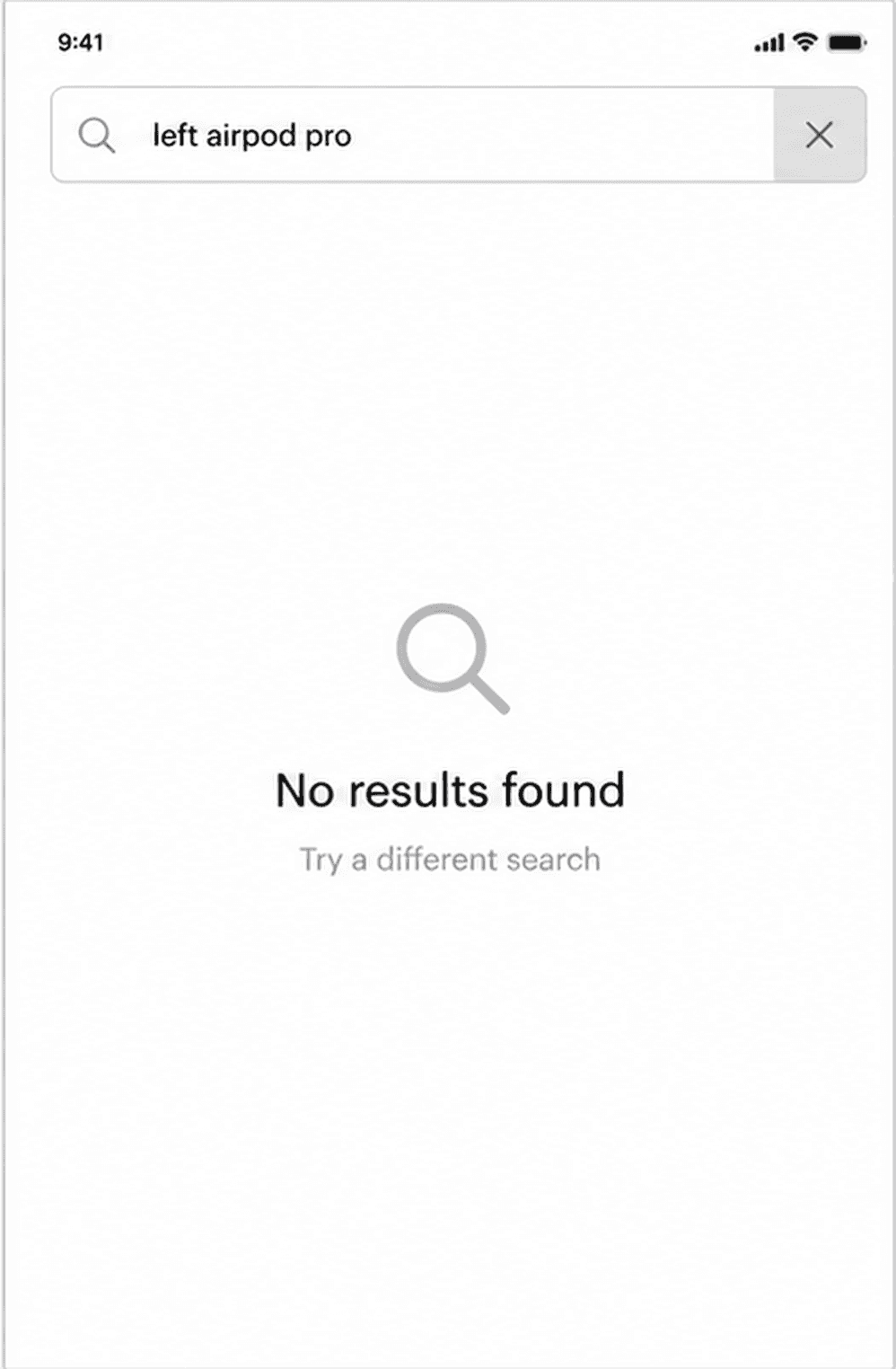
Search-first explorations
the structure
Turning Inventory Into Four Questions
Before anything could be filtered, somebody had to decide what dimensions a replacement part actually has. I worked through the stock with the client. Four described everything they held.
That taxonomy is the store. The filters are only its interface.
BRAND
The one thing everybody knows without checking.
MODEL
Does the real work. "Apple" covers a dozen incompatible products.
PRODUCT TYPE
Left, right, or case.
CONDITION
Sets price and expectation before anyone opens a page.


handoff
What Engineering Got Was a Table
The taxonomy went to our engineer as a spreadsheet, one row per part, and the storefront, a Next.js app over Shopify, reads its filters straight from those columns. Nothing on the page was something I drew and he had to guess at.
The one argument was the product boundary. Shopify wants left, right and case as variants of one product. Variants share a page and a stock state, so a sold-out right bud would look like an in-stock left one. We went with three products and condition as the variant. More rows, a slower import, and a card that is never wrong.

The store, as a table. Everything else is a view of this.

Nothing on the card is typed by hand.
PRODUCT TYPE
Left, Right, or Case Is Not a Variant
In most stores a variant is size or color, buried in a dropdown. Here it is which physical half broke, and it is the first thing the customer knows, so left and right are separate products with separate prices and separate stock.


One product to the manufacturer. Three here.
PRODUCT DATA
The Model Number Is the Title
I set the naming convention: every product name carries the manufacturer's code. It is printed on the physical part, so someone can hold their case up to the screen and compare characters instead of deciding whether two black cases match.
Ugly in a product title, and the most useful thing on the page.


STOCK STATE
Availability Is the Answer, Not a Nudge
With substitutes, out of stock is a soft signal and you push an alternative. Here there is one correct part, so stock sits on the card rather than one click deeper.


WHERE IT STILL FAILS
Three Places Certainty Breaks
COSMETIC CONDITION
Condition is a filter, but refurbished does not say what the part will look like. Reviews mention finding marks on arrival and forgiving them. People accept wear. They should know before they buy.
DEAD ENDS
Parts go out of stock, and with no substitute to offer the customer reaches the end of a correct search with nothing to buy.
PAIRING
Buying half a pair only works if it connects to the half in your drawer. Reviews show it is the first thing people check when the box arrives, which means the reassurance is landing too late.
OUTCOME
The Right Part, the First Time
The store launched in spring 2025 with the four filters as the front door and search as a shortcut. Returns, the number that matters most when every sale is a single part, came in well under the category norm, and most orders went through the filters without a search at all.
2.1%
COSMETIC CONDITION
74%
DEAD ENDS
1,400+
single parts shipped
NEXT STEPS
Telling People How Close They Are
Filtering narrows the grid, but nothing says how far you have left to go. A live result count beside the filters would give narrowing a number.

Brand and Model set. Three parts left. Now the number says so.