ByteATM

ByteATM

When a financial app creates doubt, users don't retry. They leave.

I redesigned the funding and sending flows for users aged 40–65 encountering crypto for the first time. For that user, clarity and reassurance aren't nice-to-haves. They are the product.

Role:

Lead UX/UI

Lead UX/UI

Scope:

Crypto, Finance

Crypto, Finance

Platform:

Platform:

IOS / Android

IOS / Android

Context:

Fintech / Crypto Wallet

Fintech / Crypto Wallet

ByteWallet has since rebranded as Byte Vault. This case study reflects the design direction I owned during my time there.

ByteWallet has since rebranded as Byte Vault. This case study reflects the design direction I owned during my time there.

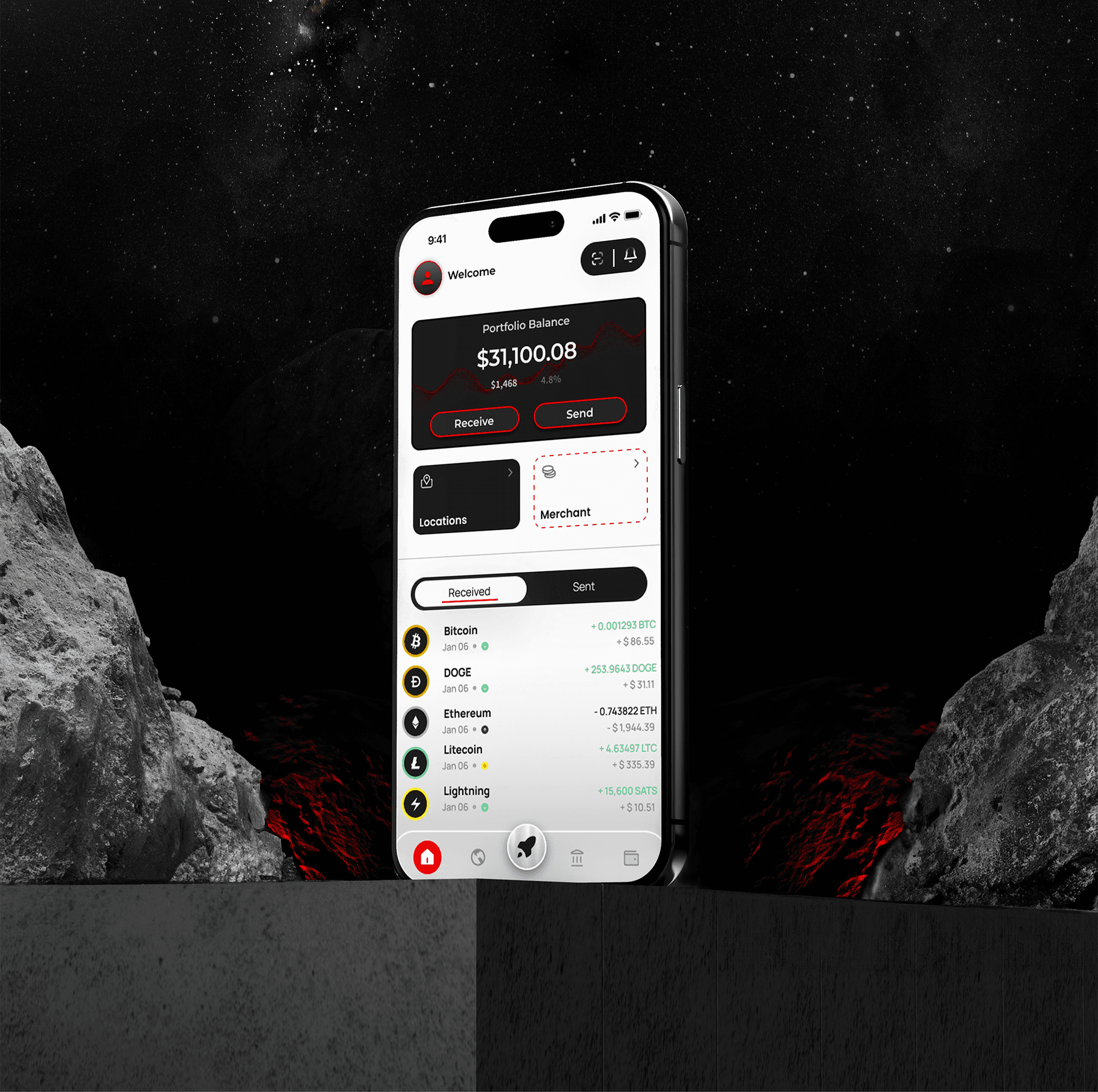
Figma deliverable — 3 final screens · Balance overview · Confirmation · Success state

Figma deliverable — 3 final screens · Balance overview · Confirmation · Success state

Figma deliverable — 3 final screens · Balance overview · Confirmation · Success state

CONTEXT

First designer in six years. Starting from nothing.

I was the first designer in ByteWallet's six-year history. There was no system, no flows, no visual identity. What existed was a template-based product built without a design perspective. I inherited real users, real money moving through a broken interface, and no foundation to build on.

THE PROBLEM

Confusion in a financial app doesn't just frustrate. It costs.

Our core user was not a crypto trader. They were between 40 and 65, arriving through ATM placements across the US or Facebook ads, many using crypto for the first time. Four failure points kept surfacing.

01

Unknown terminology

Terms like "gas fee," "network fee," and "UTXO" appeared in the funding flow with no explanation. First-time users had no framework for what they meant — they stalled, called support, or abandoned entirely.

02

Balance vs. spendable balance

No clear distinction between total balance and the amount actually available to send. Users entered amounts that failed without understanding why, and the error state gave them nothing to act on.

03

Confirmation screen as warning

The screen read like a legal document. Users paused, re-read every line, second-guessed the transaction, and abandoned at the highest-stakes moment in the flow.

04

No recovery path

When something went wrong, the error was a dead end. Users had no idea what happened or what to do next. No retry logic, no explanation, no path forward.

UNDERLYING

The home screen had accumulated features for a user the product didn't yet have

Merchant POS signup, real estate investing widgets, a crypto news feed, a rewards program — all competing for attention on the same screen as the core wallet. A user who arrived through an ATM and wanted to send $200 to their kid was asked to navigate a product that didn't know what it was for. The sending and funding flows were broken while the home screen was being expanded. That tension shaped every design decision I made.

01

Unknown terminology

Terms like "gas fee," "network fee," and "UTXO" appeared in the funding flow with no explanation. First-time users had no framework for what they meant — they stalled, called support, or abandoned entirely.

02

Balance vs. spendable balance

No clear distinction between total balance and the amount actually available to send. Users entered amounts that failed without understanding why, and the error state gave them nothing to act on.

03

Confirmation screen as warning

The screen read like a legal document. Users paused, re-read every line, second-guessed the transaction, and abandoned at the highest-stakes moment in the flow.

04

No recovery path

When something went wrong, the error was a dead end. Users had no idea what happened or what to do next. No retry logic, no explanation, no path forward.

UNDERLYING

UNDERLYING

The home screen had accumulated features for a user the product didn't yet have

Merchant POS signup, real estate investing widgets, a crypto news feed, a rewards program — all competing for attention on the same screen as the core wallet. A user who arrived through an ATM and wanted to send $200 to their kid was asked to navigate a product that didn't know what it was for. The sending and funding flows were broken while the home screen was being expanded. That tension shaped every design decision I made.

SUPPORT TICKET

"I pressed Max and the number wasn't what I expected. I don't understand why it's showing me a different amount than my balance."

A user tried to send their full Bitcoin balance. They hit Max. The number that appeared was lower — network fees had been deducted — and there was no explanation anywhere on screen. Just a number that didn't add up, and a user who now didn't trust the app at all. The user wasn't doing anything wrong. The interface was asking them to do math the product should have been doing for them.

A user tried to send their full Bitcoin balance. They hit Max. The number that appeared was lower — network fees had been deducted — and there was no explanation anywhere on screen. Just a number that didn't add up, and a user who now didn't trust the app at all. The user wasn't doing anything wrong. The interface was asking them to do math the product should have been doing for them.

“The 3D models David created for our product scanner have been a game changer. They showcase our technology perfectly and integrate seamlessly with our GIB displays at Walmart, making it easier for our teams to demonstrate and for clients to understand the value we bring.”

Jason Broom — CEO of IKEA

DESIGN APPROACH

Audit first. Design where the friction actually was.

Before touching any UI I audited the existing flows to identify exactly where users were carrying cognitive load the product should have been carrying. The goal wasn't aesthetic improvement — it was functional clarity at each decision point.

The redesign had real constraints. Financial compliance required confirmation steps at fixed points that couldn't be removed or reordered. Legacy systems meant fee data couldn't surface dynamically — fee disclosure had to happen at the review screen rather than updating live as users typed. Every constraint shaped a decision.

Does this screen close the decision the user already made — or does it reopen it? Anything that introduced new doubt got cut.

Does this screen close the decision the user already made — or does it reopen it? Anything that introduced new doubt got cut.

Wrap up
Wrap up

The 3D work not only improved the company’s product presentations but also supported the efficient deployment of the scanners in Walmart, aligning with the retailer’s focus on innovation and efficiency.

Scope:
Scope:

The company needed highly detailed 3D models to accurately represent the scanners, showcase their features, and integrate seamlessly with the GIB display system in Walmart stores. The models had to be functional for marketing, demonstration, and training purposes.

“The 3D models David created for our product scanner have been a game changer. They showcase our technology perfectly and integrate seamlessly with our GIB displays at Walmart, making it easier for our teams to demonstrate and for clients to understand the value we bring.”

Jason Broom — CEO of IKEA

Wrap up
Wrap up

The 3D work not only improved the company’s product presentations but also supported the efficient deployment of the scanners in Walmart, aligning with the retailer’s focus on innovation and efficiency.

More projects
More projects
Let’s build something thoughtful

ceciliafiore.designer@gmail.com

Open to product design roles

BACK TO TOP

New York City, NY

© Cecilia F. Lopez 2026. All rights reserved
Let’s build something thoughtful

ceciliafiore.designer@gmail.com

Open to product design roles

BACK TO TOP

New York City, NY

© Cecilia F. Lopez 2026. All rights reserved
Let’s build something thoughtful

ceciliafiore.designer@gmail.com

Open to product design roles

BACK TO TOP

New York City, NY

© Cecilia F. Lopez 2026. All rights reserved